 ENGLISH
 ESPAÑOL

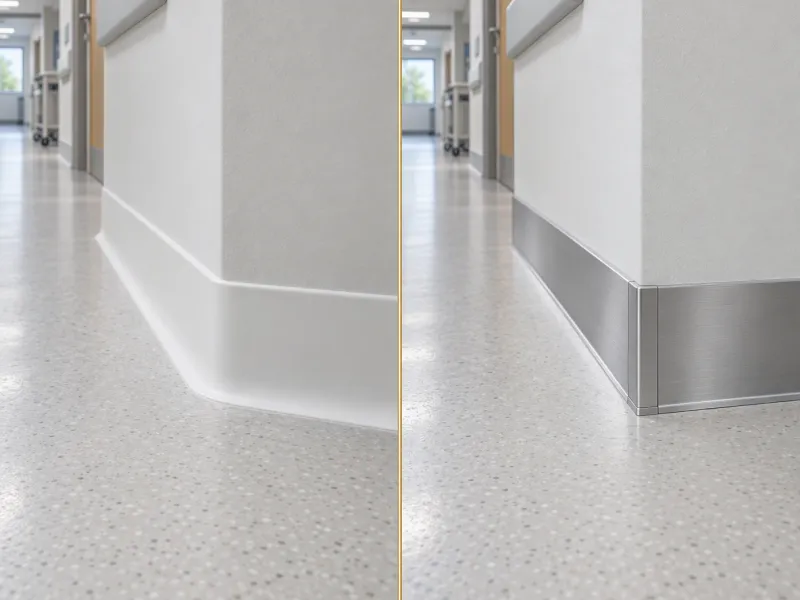
After supplying flooring accessories to over 200 projects across 40 countries, our procurement team keeps hearing the same question from buyers: should we go with PVC or aluminum skirting? The marketing says aluminum is premium. The budget says PVC. Here's the honest answer from the factory floor.
Most comparison articles online read like they were written by someone who's never installed a single skirting board. We've installed thousands. And the truth is — it depends on your project type, your traffic level, and how deep your pockets are.
Here's the catch: for 70% of commercial projects, a well-made PVC skirting board (also called vinyl wall base) will outperform aluminum — at roughly half the cost. But for the remaining 30%, aluminum is the only correct answer. We'll break down exactly which projects fall into which bucket.
What Exactly Is a PVC Skirting Board?
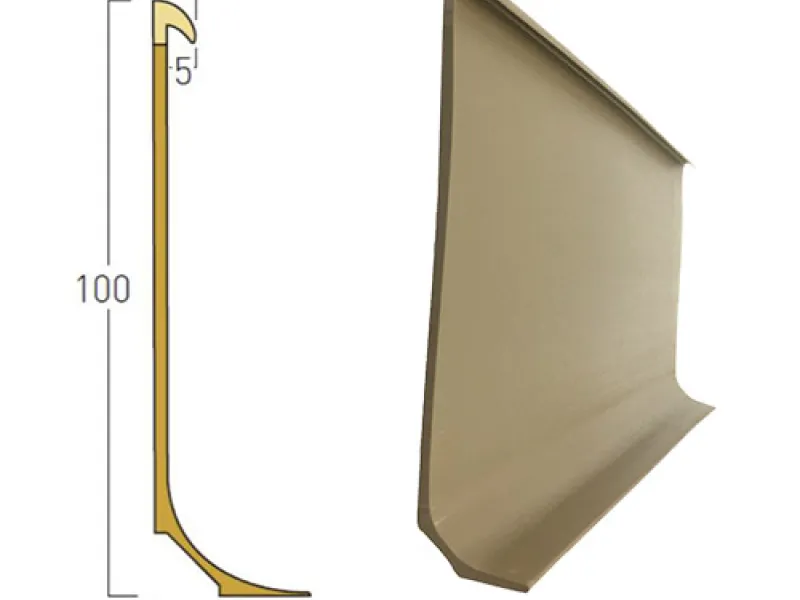
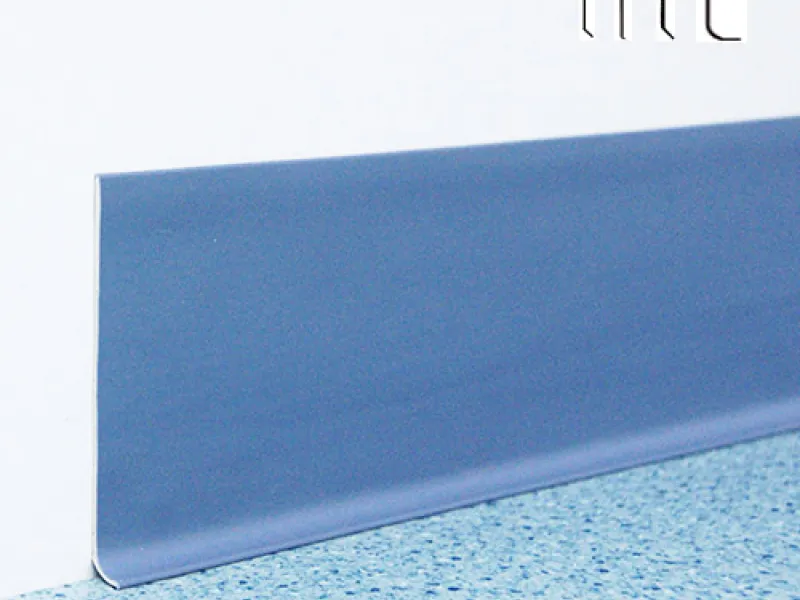
Let's get the basics straight. A PVC skirting board — sometimes called vinyl wall base or vinyl coving — is a flexible profile made from homogeneous polyvinyl chloride. It runs along the bottom of interior walls, sealing the gap between wall and floor. That gap, if left open, becomes a highway for dust, moisture, and insects.
The PVC skirting boards we manufacture come in heights from 63mm to 120mm and thicknesses from 1.7mm to 3mm. They're extruded from thermoplastic vinyl in a single homogeneous layer — meaning the color runs all the way through, not just on the surface. Scratch it, and the color is still there.
That matters. Here's why.
PVC vs Aluminum Skirting: The Real-World Breakdown
We've seen spec sheets. We've seen test reports. But what actually happens when these materials meet a hospital corridor with 3,000 daily footsteps? Or a kindergarten where kids bounce toy cars off the wall base every day?
Let's put them side by side based on what our engineering team has measured in real installations:
Flexibility and Installation Speed
This is where PVC wins outright. Our installers can cut a flexible PVC skirting board with a utility knife and bend it around a 90-degree corner without any special tools. No miter saw. No corner pieces. No filing.
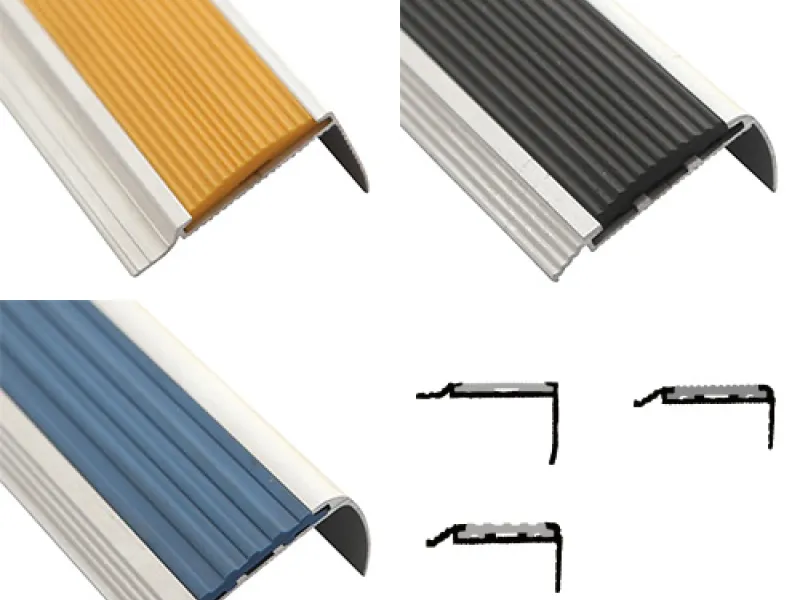
Aluminum skirting — even our anodized aluminum profiles — requires cutting with a metal saw, separate corner connectors, and careful alignment. On a 500-meter project, that's a difference of roughly 2 days of labor. At international installation rates, that's real money.
Impact Resistance: The Plot Twist
Here's where conventional wisdom gets it wrong. Most people assume aluminum is tougher. It is metal, after all.
But our field data tells a different story. When a hospital gurney hits an aluminum skirting board at walking speed, the metal dents. Permanently. You can't pop a dent out of an anodized aluminum profile without replacing the section.
A flexible PVC skirting board for commercial and residential wall protection absorbs that same impact and bounces back. The homogeneous vinyl has built-in memory recovery. Hit it, and it returns to shape. That's why hospitals, nursing homes, and kindergartens overwhelmingly choose PVC.
Hygiene and Cleanability
In healthcare and food-service environments, this is non-negotiable. PVC skirting boards have no joints, no seams, and no surface coating to peel. The material is inherently antibacterial and non-toxic. You can wipe it down with hospital-grade disinfectant daily for years, and it won't degrade.
Aluminum has an anodized coating that's also hygienic, but here's the catch: where two aluminum sections meet, there's a seam. Seams trap bacteria. In sterile environments, that's a problem.
For complete hygienic wall-to-floor transitions, many of our hospital clients pair PVC skirting with a cap cove skirting profile to create a seamless cove with zero crevices.
Direct Comparison: PVC vs Aluminum Skirting Board
| Property | PVC Skirting Board | Aluminum Skirting Board |
|---|---|---|
| Material | Homogeneous thermoplastic vinyl | 6063 anodized aluminum alloy |
| Flexibility | Highly flexible, bends around corners by hand | Rigid, requires pre-formed corner pieces |
| Impact Recovery | Self-recovers (memory effect) | Dents permanently |
| Cutting Method | Utility knife | Metal saw or miter saw |
| Installation Speed | Fast (adhesive only, 5 steps — see guide) | Moderate (screws, connectors, corners) |
| Moisture Resistance | Excellent (waterproof, non-corrosive) | Good (anodized coating can chip) |
| Fire Rating | Flame retardant, self-extinguishing | Non-combustible |
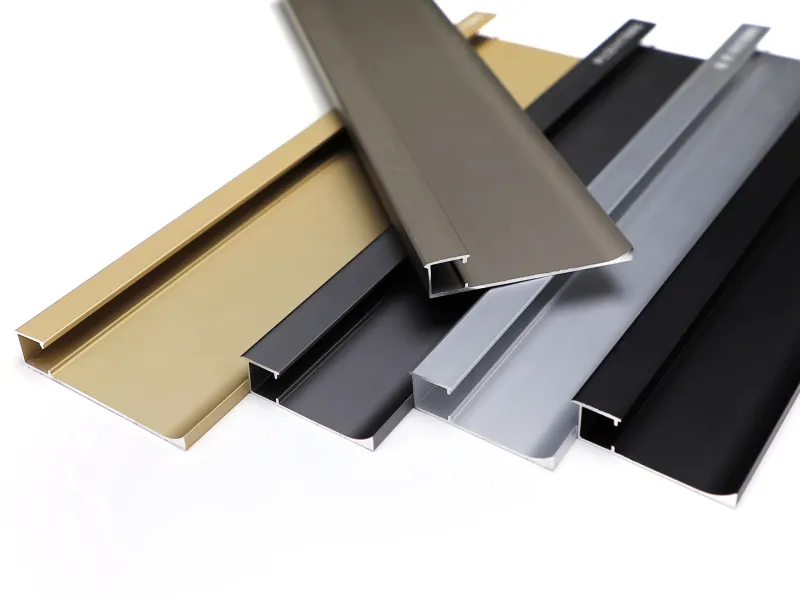
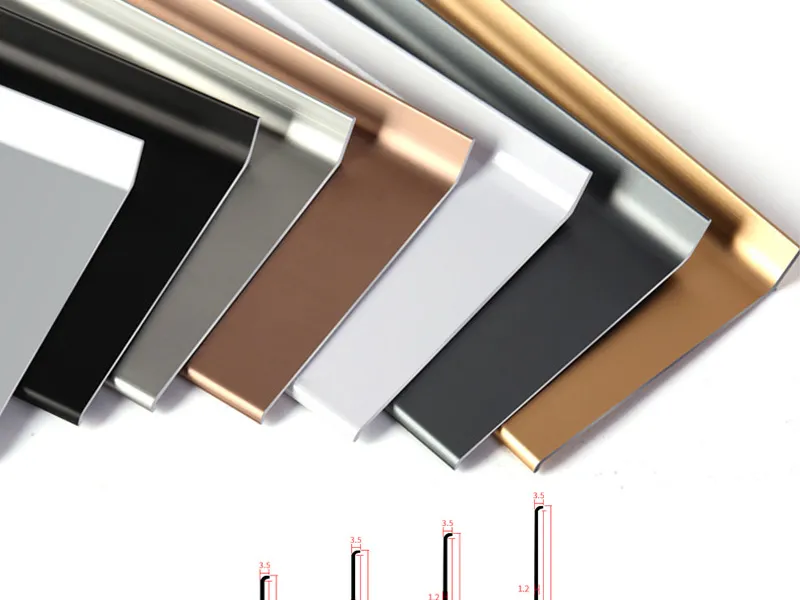
| Color Options | Unlimited (color-matched to flooring) | Limited (silver, black, gold, champagne, bronze) |
| Surface Finish | Matte, homogeneous color throughout | Anodized, brushed, powder-coated |
| Wire Management | Limited (needs separate channel) | Built-in cable channel on select models |
| Best Application | Hospitals, schools, kitchens, wetrooms, residential | Offices, retail, luxury hotels, LED-integrated interiors |
| Cost (FOB per meter) | $3.50 – $5.00 | $2.50 – $3.00 (standard) / higher for LED models |
| Expected Lifespan | 10-15 years (commercial), 20+ years (residential) | 15-20 years (if coating intact) |
| Sustainability | Recyclable thermoplastic, low embodied energy | Recyclable, higher embodied energy |
When Should You Actually Choose Aluminum?
Frankly, aluminum skirting boards do have a place. And it's a legitimate one. We're not here to pretend PVC is perfect for everything.
You should choose aluminum when:
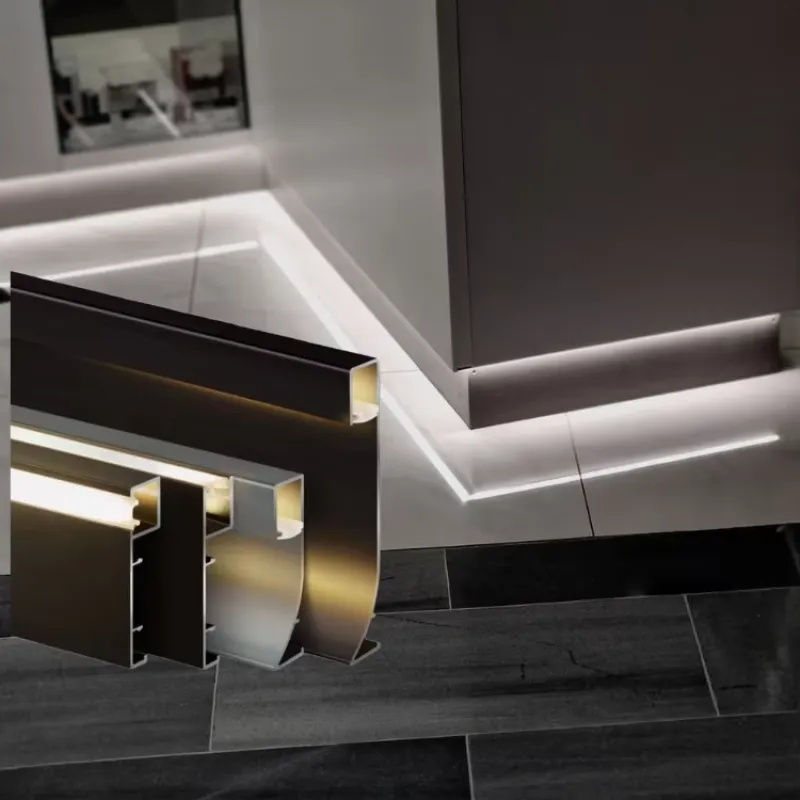
- You need integrated LED lighting. Our ASBL-50 skirting with light strip channel simply can't be replicated in PVC. The precision aluminum groove holds LED strips perfectly aligned, and the metal acts as a heat sink. PVC melts.
- The project is a luxury hotel or flagship office. Aluminum communicates permanence and quality. The brushed or anodized finish catches light in a way PVC can't replicate.
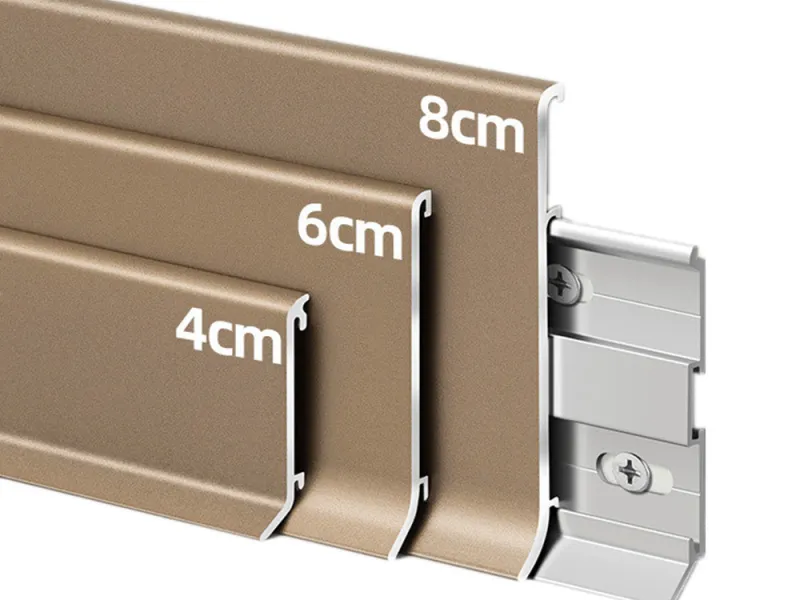
- You need hidden cable management. Our double-layer snap-in aluminum skirting has a built-in wire channel that's structurally impossible in soft PVC.
- Fire codes require non-combustible materials. While PVC skirting is flame-retardant and self-extinguishing, it's technically combustible. Some jurisdictions require non-combustible metal in specific zones.
For everything else? PVC is your workhorse. We've supplied homogeneous vinyl wall base for high-traffic areas to hospitals in Southeast Asia, schools in the Middle East, and residential complexes across Africa. It performs. Every time.
What About Wood and MDF Skirting?
Someone always asks. Let's settle it quickly.
Wood skirting looks gorgeous in a living room. We love it. But put it in a hospital corridor with daily mop-downs, and it'll warp within 18 months. MDF is worse — expose it to moisture and it swells like a sponge. Neither belongs in commercial or healthcare environments.
As we noted in our previous article on PVC skirting selection, the material choice should be driven by the environment, not the aesthetics. Form follows function.
The Hidden Cost of Choosing the Wrong Skirting
Here's something procurement teams miss: replacement cost.
We worked with a hotel chain in Dubai that initially spec'd painted MDF skirting for 340 rooms to save $0.80 per meter. Two years later, the maintenance team was replacing swollen sections in 60% of the rooms. The replacement cost — including labor, downtime, and repainting — was 4x the original material cost.
Had they used PVC skirting at $3.50/meter, the total lifecycle cost over 10 years would have been lower. Zero replacements. Zero downtime. That's the math that matters.
On the flip side, we had a client spec PVC skirting for a high-end boutique hotel lobby where the designer wanted visible brushed-gold metal profiles with integrated lighting. PVC looked cheap there. Aluminum was the right call. The ASBL-50 delivered exactly the look the architect wanted.
Installation Reality Check
A material is only as good as its installation. We've seen premium PVC skirting fail because the contractor used the wrong adhesive. We've also seen budget PVC skirting last 15 years because the installer followed the spec.
For PVC skirting installation, the process is dead simple — but only if you follow the steps:
- Clean the wall surface thoroughly. Dust and oil are the enemy of adhesion.
- Apply a quality multi-purpose adhesive along the wall (not the skirting).
- Wait 3-5 minutes for the adhesive to become tacky.
- Press the PVC skirting firmly against the wall, working from one end.
- Use a rubber mallet for tight seams and corner transitions.
Our detailed 5-step installation guide covers the full process with photos.
One tip that saves installations: if your PVC skirting arrives slightly deformed from shipping (it happens in cold-weather transit), don't panic. Hit it with a heat gun or soak in hot water at 80°C. The thermoplastic will recover its original shape completely. Try that with aluminum.
Color Matching: PVC's Secret Weapon
This is the part that wins over designers. Our color lab can match any flooring color within a ΔE of 1.5 — which is effectively invisible to the human eye. We do this by extruding the PVC in the exact color from the start, not painting it on.
Why does this matter? Because when the skirting matches the flooring, the room feels bigger. The visual line is continuous. There's no jarring transition between floor and wall. Interior designers know this trick, and it's why homogeneous vinyl wall base for high-traffic areas has become the default in healthcare and education projects worldwide.
Aluminum? You get silver, black, gold, champagne, grey, bronze, and rose gold. That's it. Custom powder-coating is possible, but it adds cost and lead time.
The Verdict: PVC Skirting Board vs Aluminum Skirting Board
Let's cut through the noise.
Choose PVC skirting (vinyl wall base) when:
- Your project involves healthcare, education, hospitality, or residential interiors
- You need color-matched skirting to blend with flooring
- Impact resistance and recovery are critical
- Budget and installation speed matter
- The environment is wet or frequently cleaned
Choose aluminum skirting when:
- You need integrated LED lighting channels
- The space demands a premium metallic aesthetic
- Built-in cable management is required
- Fire codes mandate non-combustible materials
- You're working on a flagship commercial or luxury interior
For most B2B procurement decisions, the answer is PVC. It's not a compromise — it's the correct engineering choice for the majority of commercial environments. Our PVC skirting board range (PSB60-120) covers heights from 63mm to 120mm with both toed and toeless options, ready for global shipping.
Ready to Spec Your Skirting?
Our engineering team will review your project requirements and recommend the exact skirting profile, height, and material for your application. We ship globally from our China facility with full quality control documentation.
Request free samples of both PVC and aluminum skirting boards to compare side by side. Email us at [email protected] or submit your inquiry here.
Frequently Asked Questions
1. What is the difference between PVC skirting board and vinyl wall base?
Nothing. They're the same product with different names. "PVC skirting board" is more common in European and Asian markets, while "vinyl wall base" is the standard term in North American specifications. Both refer to flexible, homogeneous thermoplastic profiles installed at the wall-floor junction. Our PVC skirting boards are manufactured from the same material whether the order specifies "vinyl wall base" or "PVC skirting" — the spec sheet, fire rating, and antibacterial properties are identical.
2. Can PVC skirting boards be used in hospitals and cleanroom environments?
Yes — and they're the preferred choice. PVC skirting boards are non-toxic, antibacterial, and can be welded to vinyl flooring using PVC welding rods to create a completely sealed, crevice-free wall-to-floor transition. For maximum hygiene, pair the skirting with a cove former and capping profile to eliminate the 90-degree angle where bacteria accumulates. This is standard practice in hospitals, laboratories, and food-processing facilities.
3. How long do PVC skirting boards last in high-traffic commercial areas?
Based on our 7+ years of supply data, properly installed PVC skirting boards last 10-15 years in commercial environments with heavy foot traffic, and 20+ years in residential settings. The homogeneous vinyl formulation resists UV degradation, moisture, and chemical cleaning agents. Unlike painted wood or coated aluminum, the color runs through the entire material thickness — so even surface abrasion doesn't expose a different color underneath. If a section does get damaged, individual sections can be replaced without disturbing the entire run, since each piece is installed independently with adhesive.